
DORA & Resilience · August 24, 2026
AI-speed defence becomes a DORA control
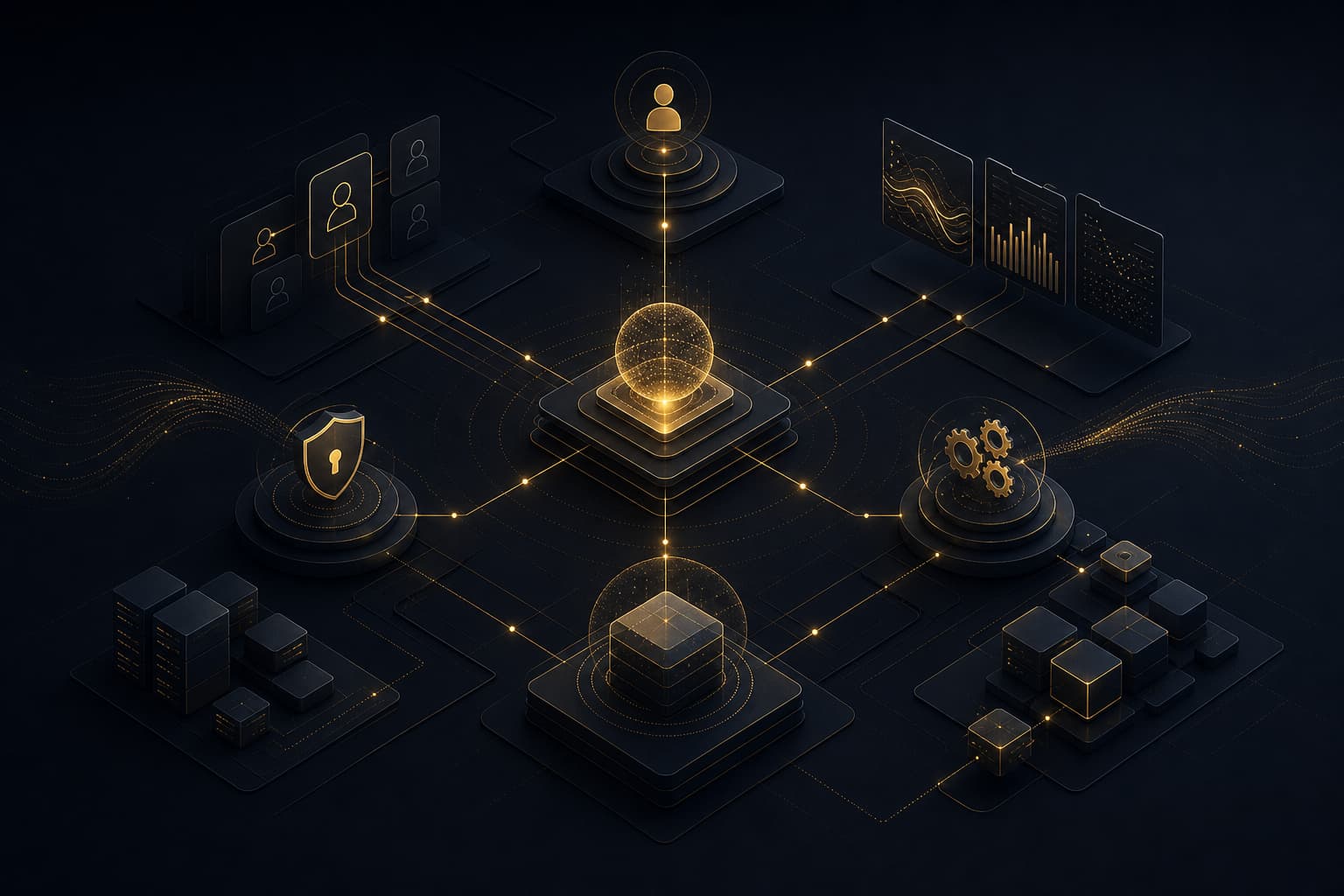
Google Cloud’s CISO published a useful signal on 21 August 2026: in the AI era, the differentiator is not abandoning security fundamentals, but scaling them to match adversaries moving at machine speed. The note points to agent-based security review, dynamic product dossiers, and a Morgan Stanley example where Google Cloud and Wiz claim threat detection time was reduced from a 45-minute window to 90 seconds or less. Treat the performance claim as vendor-reported, but the direction is important: vulnerability management, identity control and remediation workflows are converging into an automated operating model.
For Luxembourg fund managers, AIFMs, private banks and regulated FinTech platforms, this is not just a cloud-security story. The European Supervisory Authorities have already linked frontier AI to ICT risk, DORA governance and the oversight of critical ICT third-party providers. The European Commission’s AI Act enforcement framework is also live for key provisions from 2 August 2026. The practical message is clear: AI-enabled defence will be judged by governance, evidence, access control and recoverability — not by whether a vendor has attached an AI label to an alert queue.
Regulatory & Business Impact
DORA changes the conversation from “do we have tools?” to “can we prove control effectiveness under stress?” That distinction matters. A security platform that generates 5,000 findings without ownership, business criticality, remediation SLAs or audit evidence does not reduce operational risk. In a regulated environment, especially one supporting funds, brokerage workflows, payment operations or private banking data, unmanaged alert volume is itself a resilience weakness.
The ESA statement on frontier AI risks is a useful frame. Supervisors are not telling firms to avoid AI; they are saying that AI-related ICT risks must be governed through the same operational resilience discipline expected for critical systems. That means prevention, detection, response, recovery, third-party dependency mapping and board-level accountability. If an AI coding assistant, SaaS agent, LLM gateway or automated remediation workflow can touch production paths, privileged credentials, client data or regulated reporting, it belongs in the ICT risk management perimeter.
The business impact is immediate in three areas.
First, identity becomes the control plane. Google’s separate IAM update earlier this year introduced first-class agent identity, agent gateway patterns and policy enforcement for agent-to-agent and agent-to-tool interactions. Whether a firm uses Google Cloud, Microsoft, AWS or a private stack, the architectural principle is the same: autonomous agents need named identities, bounded permissions, telemetry and revocation paths. A generic service account shared by a LangGraph workflow, CI/CD runner and remediation bot is no longer acceptable design.
Second, vulnerability management has to move closer to exposure management. Wiz’s August security updates describe AI threat readiness as a function of breadth of visibility and speed of action, including visibility across hybrid environments, developer workstations, SaaS, CI/CD pipelines and AI agents. That maps directly to the operational reality in European finance: the blast radius of a compromised developer token, misconfigured SaaS connector or over-privileged automation account can be larger than a traditional server compromise.
Third, AI Act and DORA evidence will overlap. The AI Act enforcement framework gives the AI Office investigative and sanctioning powers for in-scope systems and GPAI obligations. DORA asks financial entities to manage ICT risk, incidents, resilience testing and third-party dependencies. For leadership, this means AI governance should not sit in a separate innovation spreadsheet. It should be connected to the same CMDB, risk register, supplier register, observability stack and incident workflow used for critical infrastructure.
Architectural & Operational Blueprint
The right response is not to buy another AI security product and hope it closes the gap. The response is to design an operating model where AI-assisted detection and remediation are constrained by strong infrastructure controls.
Start with identity and segmentation. Every automation path should have a named principal: CI/CD jobs, Ansible execution nodes, LangGraph agents, ticketing bots, vulnerability scanners, RAG services and remediation workers. Permissions should be scoped by environment, application, data classification and action type. Use allow and deny policies where available, and enforce network-level separation through reverse proxies, F5 or Nginx controls, private endpoints and firewall policy. An agent that can query logs should not automatically be able to restart production services or rotate database credentials.
Then build the evidence fabric. Zabbix, Prometheus, Grafana, SIEM telemetry, EDR events, cloud audit logs, Kubernetes events, hypervisor logs and application traces should feed a single operational view. For DORA purposes, the key is not only detection; it is proving timeline, ownership and recovery. Every material incident should answer: what changed, who or what executed the change, what control detected it, what automation ran, who approved remediation, and what residual risk remains.
For private AI, keep inference close to the data where the regulatory case demands it. In many Luxembourg financial environments, a sovereign pattern using vLLM or Ollama on controlled infrastructure, Qdrant for local vector search, and a tightly governed LangGraph orchestration layer will be more defensible than routing sensitive operational data into external SaaS by default. That does not mean public cloud is forbidden. It means the placement decision should be explicit: data category, model provider, retention policy, encryption, operator access, contractual terms, exit plan and DORA supplier mapping.
For remediation, use automation with brakes. Ansible, GitOps and workflow engines are powerful, but production change still needs policy. Low-risk actions can be auto-executed: disable a leaked token, quarantine a non-critical host, open a firewall block for a known IOC, or roll back a bad configuration in a staging environment. Higher-risk actions should require human approval: production failover, database restore, privileged access changes, firewall changes affecting client traffic, or kernel and hypervisor patching on clustered platforms.
The most mature pattern is a closed loop: detect, enrich, rank by business impact, propose remediation, validate against policy, execute or request approval, then write evidence back to the ticket, dashboard and risk register. That is where AIOps becomes operational resilience rather than dashboard decoration.
What This Changes in Practice
- Boards should ask for control evidence, not AI demos. Show identity boundaries, audit logs, recovery timelines, incident rehearsals and supplier dependency maps.
- CISOs should classify agents as identities. Any agent that can read data, call APIs, run code or change infrastructure needs ownership, least privilege and revocation.
- Infrastructure teams should map automation blast radius. Document what Ansible, CI/CD, SOAR, Kubernetes controllers and AI agents can change in each environment.
- Fund operations should connect resilience to business services. NAV production, investor reporting, order routing, risk engines and client portals need service-level recovery evidence.
- Cloud and SaaS reviews should include AI paths. Ask whether vendor AI features process logs, tickets, documents, prompts, source code or credentials, and where that data is retained.
- Private inference should be evaluated for sensitive workflows. For regulated operational data, local vLLM/Ollama plus Qdrant and strict access control can reduce sovereignty and leakage risk.
- Security automation should use approval gates. Full autonomy is not the target for critical finance systems; controlled acceleration is.
How Ali Run AIOps Approaches This
Ali Run AIOps treats AI security as an infrastructure discipline. The consulting work starts with the real estate of the environment: Linux systems, virtualization, Kubernetes, reverse proxies, firewalls, storage, backup, monitoring, identity and operational workflows. Only then does it make sense to add private inference, RAG, agent orchestration or automated remediation.
For Luxembourg and European financial firms, the objective is not hype. It is a resilient operating model that can satisfy DORA evidence expectations, reduce manual toil, contain cost, and preserve sovereignty where data sensitivity demands it. In practice, that means hardened Linux platforms, Proxmox or VMware architecture reviews, Zabbix/Grafana observability, Ansible automation, controlled LLM deployment with vLLM or Ollama, Qdrant-backed retrieval, and LangGraph agents designed with approval gates rather than blind autonomy.
Sources
- Google Cloud — Cloud CISO Perspectives: Sticking to security fundamentals in the AI era
- Google Cloud — Introducing Google AI Threat Defense
- Google Cloud — What’s new in IAM: Security, governance, and runtime defense
- Wiz — Wiz at Black Hat 2026: Driving AI Threat Readiness
- European Banking Authority — ESAs call for enhanced governance to mitigate ICT risks from frontier AI models
- European Commission — The enforcement framework of the AI Act
Related Notes
DORA & Resilience · Sep 10, 2026
DORA Baseline Incident Report: Rethinking ICT Resilience
ESA data shows third-party failures outweigh cyberattacks. Discover how EU financial leaders must adapt DORA resilience strategies.
DORA & Resilience · Aug 27, 2026
CSSF brings third-country branches into DORA
Luxembourg’s CSSF updated DORA circulars for third-country branches. Cross-border finance now needs branch-level resilience evidence.