
Sovereign AI · September 6, 2026
Luxembourg Anchors Sovereign Compute with MeluXina-AI
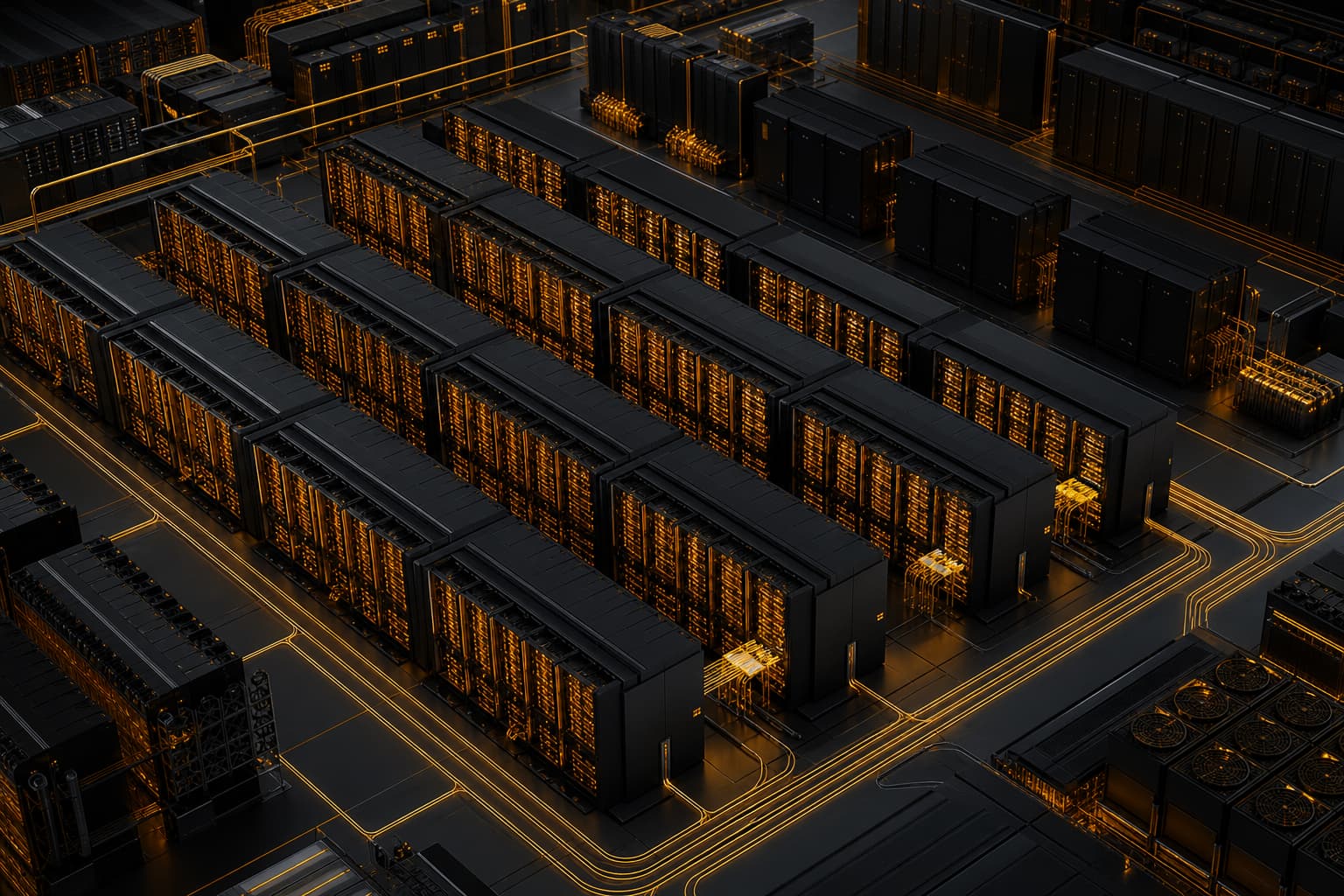
The European High Performance Computing Joint Undertaking (EuroHPC JU) has formally signed a contract with E4 Computer Engineering to build and deploy MeluXina-AI, an AI-optimized supercomputer designated as the core compute engine for the Luxembourg AI Factory. Operated by LuxProvide, this sovereign infrastructure initiative represents a direct structural response to Europe's dependence on offshore cloud hyper-scalers. By pairing high-density accelerated hardware with strict data residency frameworks, Luxembourg provides a localized foundation for enterprise artificial intelligence deployment across regulated industries.
For Luxembourg’s financial services, legal, and public sector leadership, MeluXina-AI transitions sovereign AI from a regulatory ideal into operational reality. As AI workloads scale from experimental pilot projects into mission-critical core systems, relying on foreign public clouds exposes enterprises to jurisdictional data transfer risks, unpredictable token latency, and vendor lock-in. MeluXina-AI establishes a localized, high-throughput ecosystem where sensitive financial models and private domain data can be fine-tuned and deployed without violating stringent European privacy mandates.
Regulatory & Business Impact
Deploying enterprise AI within Luxembourg’s financial ecosystem requires strict alignment with the Commission de Surveillance du Secteur Financier (CSSF) and the European Digital Operational Resilience Act (DORA). Traditional public cloud AI endpoints frequently introduce ambiguity around cross-border data processing, metadata extraction, and vendor supply chain vulnerabilities. MeluXina-AI directly mitigates these compliance burdens by guaranteeing strict on-premise data localization within a sovereign jurisdiction.
From a risk management perspective, the Luxembourg AI Factory reduces reliance on proprietary API endpoints. Financial institutions can execute large-scale ModelOps, domain-specific fine-tuning, and retrieval-augmented generation (RAG) pipelines while maintaining complete control over proprietary parameters and inference telemetry. Furthermore, the localized compute framework provides predictable operational cost structures. By avoiding dynamic cloud egress charges and API rate limits, enterprises can model their long-term AI infrastructure expenditures with institutional certainty.
Architectural & Operational Blueprint
The underlying architecture delivered by E4 Computer Engineering combines high-density GPU acceleration with high-bandwidth interconnects designed specifically for massive parallel inference and distributed training. Integrating this sovereign supercomputing capability into existing enterprise IT ecosystems requires a disciplined engineering blueprint:
- Data Ingestion & Air-Gapped Controls: Data pipelines feeding MeluXina-AI must maintain zero-trust segmentation. Enterprise data planes interface with the supercomputer via secure, encrypted high-throughput tunnels. Internal reverse proxies manage traffic flow, preventing direct exposure of compute nodes to public endpoints.
- Model Serving & Orchestration: Leveraging enterprise Linux distributions, containerized orchestration environments utilize vLLM and TensorRT-LLM runtimes to maximize token generation throughput and hardware utilization.
- Automated Configuration & Configuration Drift Prevention: Systems deployment and node management rely on Ansible workflows, ensuring reproducible environment states, security patch validation, and deterministic infrastructure deployments.
- Unified Observability & Performance Telemetry: Enterprise observability stacks—incorporating Prometheus, Grafana, and specialized GPU metrics exporters—monitor memory bandwidth, thermal thresholds, job queues, and latency SLA metrics in real time.
What This Changes in Practice
- Eliminates Regulatory Ambiguity: Sovereign compute guarantees compliance with CSSF circulars and DORA requirements by preventing external cloud vendor data exposure.
- Accelerates Time-to-Production: Local access to high-density GPU capacity reduces model fine-tuning cycles from weeks to hours, accelerating time-to-value for domain-specific models.
- Standardizes AIOps Frameworks: Enterprise teams must move beyond simple cloud APIs toward containerized, orchestratable model execution architectures.
- Optimizes Total Cost of Ownership: Fixed, localized compute allocation mitigates token price fluctuations and egress penalties standard among hyper-scale providers.
How Ali Run AIOps Approaches This
Navigating the transition from hyper-scaler AI services to sovereign supercomputing platforms like MeluXina-AI requires deep operational and architectural discipline. At Ali Run AIOps, we help executive and engineering teams bridge the gap between sovereign raw compute capacity and enterprise production readiness. We design and implement resilient AIOps delivery pipelines, zero-trust data integration layers, and automated governance frameworks tailored specifically for highly regulated environments.
Our advisory and implementation methodologies ensure that your AI infrastructure is not merely compliant, but architected for maximum performance, continuous observability, and seamless operational scaling. Whether you are transitioning sensitive financial models or building domain-specific LLM applications on Luxembourg's AI Factory, we provide the strategic roadmap and hands-on engineering execution required to achieve true operational sovereignty.
Sources
Related Notes
Sovereign AI · Sep 7, 2026
Luxembourg Open-Source AI Assessment Sandbox Configurator
Luxembourg's LIST and SnT release an open-source sandbox configurator to standardize EU AI Act and DORA compliance testing for enterprise AI.
Sovereign AI · Sep 9, 2026
ESM & SnT's Sovereign AI Architecture for Bond Markets
ESM and SnT launch a sovereign AI research initiative for Euro area bond issuance, causal inference, and compliance-first market intelligence.